.png?width=1036&height=511&name=EPSI%20LOGO%20COLOR%20(1).png "EPSI Engineered Services and Products Inc")
On the surface, powder coating small parts seems like it should be easier than coating large components. Smaller parts, lighter weight, more pieces per run. Simple, right?
In reality, small parts often create some of the biggest headaches on a powder coating line. Slower loading times, inconsistent coverage, rework, and unpredictable results can all stem from one overlooked factor: how those parts are racked.
At Engineered Products & Services, Inc. (EPSI), we know that, while the coating chemistry and equipment may be dialed in, if your racking process isn’t optimized, you’ll feel it everywhere else. Let’s break down the most common pain points and where the right solutions can make a measurable difference.
Why Powder Coating Small Parts is a Different Challenge
With small parts, the actual powder coating process does not change. Parts still move through cleaning, coating, and curing just like larger components. What changes is everything surrounding that process.
With small parts, the scale shifts dramatically. Instead of handling a few large items, operators are managing dozens or even hundreds of components at once. That increase in volume introduces more contact points, tighter spacing, and significantly more handling. What might be a simple step for large parts becomes much more complex when multiplied across an entire rack.
This is why small inefficiencies show up faster and hit harder in small part applications. Even minor delays or inconsistencies can compound quickly over the course of a shift.
Grounding Problems You Can’t Ignore
Proper grounding is essential for consistent powder adhesion, and this becomes more difficult with smaller parts.
Because there is less surface area and more connection points, maintaining reliable electrical contact isn’t always straightforward. When grounding is inconsistent, the results tend to show up immediately on the finished product. You may see uneven coverage, thin spots, or areas where the powder did not fully adhere.
What makes this especially frustrating is how inconsistent it can feel. One batch looks perfect, while the next requires rework. In many cases, the difference comes down to how well parts were racked and how consistently they made contact.
When More Parts Per Rack Backfires
It is natural to try to increase efficiency by fitting more parts onto each rack. In theory, higher density should lead to higher throughput.
In practice, that approach can create new challenges if it’s not carefully managed.
When parts are packed too tightly together, they can block each other during the spray process. This leads to uneven coating and inconsistent film build across the rack. In some cases, parts may even come into contact during curing, which can damage the finish and require rework.
The goal isn’t just to fit more parts on a rack, but to do so in a way that maintains proper spacing and airflow. Without a structured approach, increasing density can actually reduce overall efficiency.
Inconsistency Across Operators and Shifts
If different operators are loading parts in different ways, you’re likely seeing inconsistent results.
This is a common issue in finishing operations. Without a standardized approach to racking, each operator develops their own method. While some may be more efficient than others, the lack of consistency makes it difficult to maintain predictable output.
Over time, this can lead to:
- Variability in coating quality
- Longer training times for new employees
- Challenges when trying to scale production
Standardization is one of the most effective ways to improve both efficiency and quality, but it requires systems that support repeatable setups.
Why Racking Matters More Than You Think
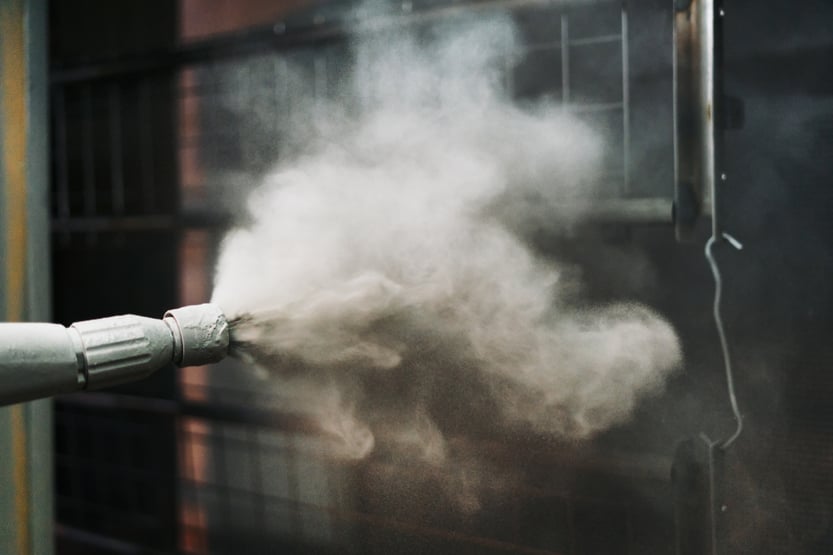
When you look at the entire process, it becomes clear that many of the biggest challenges in powder coating small parts happen before the powder is ever applied.
Racking influences how quickly parts move through the line, how consistently they are coated, and how often rework is required. It’s not just a setup step. It’s a key driver of performance across the entire operation.
Improving racking is often one of the fastest ways to see meaningful improvements in throughput and product quality.
Powder Coating Small Parts: Improve Efficiency Where It Matters Most
At the end of the day, powder coating small parts isn’t just about applying powder. It’s about how efficiently and consistently you can move parts through the entire process.
When racking is inconsistent or inefficient, everything else suffers. When it’s optimized, you unlock better throughput, improved quality, and fewer production issues.
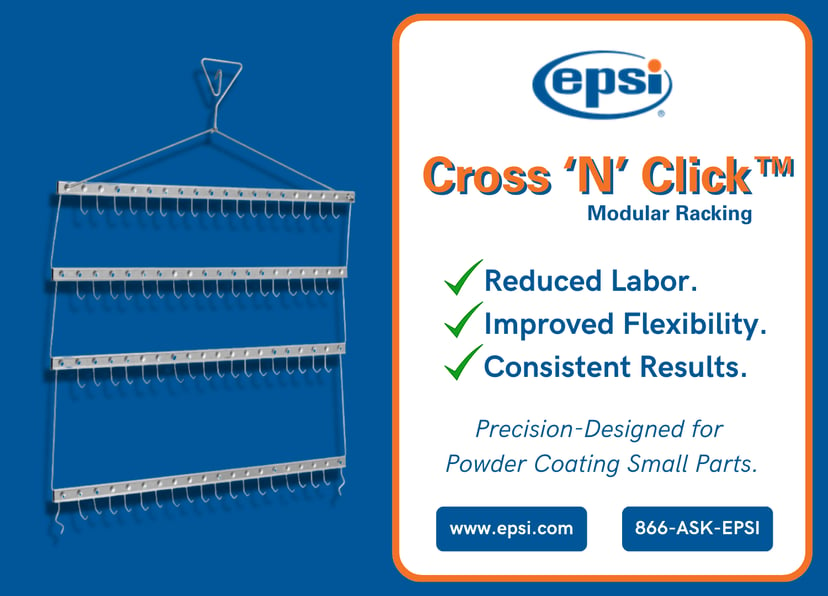
If you’re looking for ways to improve your small part coating operation, EPSI can help you identify opportunities and implement solutions that fit your process. From modular racking systems like Cross N Click™ to high-performance masking products, we are here to support your success.
Contact us today to learn more about how we can help improve your powder coating operation.