If your coating line is running but still struggling with inefficiencies, your racking may be the hidden bottleneck. Powder coating rack design plays a critical role in throughput, quality, and overall operational cost, yet it’s often overlooked until problems arise. At Engineered Products & Services (EPSI), we work closely with coaters to solve these challenges through smarter racking and masking solutions that improve performance without disrupting production.
Whether you’re dealing with inconsistent coverage, excessive touch-ups, or underutilized conveyor space, the right rack design can transform your process. Let’s break down the most important factors to consider when evaluating or improving your racking strategy.
1. Rack Suitability
Not all racks are created equal, and choosing the right one for your application is essential. A rack that works well for one type of part may create inefficiencies for another. When evaluating powder coating rack design, it’s important to consider the specific characteristics of your production environment.
For example, applications involving powder coating small parts often require high-density racking solutions that maximize part count while maintaining proper spacing. On the other hand, larger or heavier components may demand more robust rack structures that prioritize durability and stability.
You should also think about your production patterns. Long production runs benefit from racks that are optimized for repeatability and durability, while operations handling families of parts or kit-based production need flexibility without sacrificing efficiency.
A well-designed rack should support:
- Minimal touch-up requirements by reducing contact points
- Consistent grounding for effective coating transfer
- Cost-effective rack stripping and maintenance
If your current setup leads to frequent rework or difficult cleaning cycles, it may be time to reevaluate whether your racking is truly suited to your application.
2. Dedicated vs. Modular Racking
One of the most important decisions in powder coating rack design is whether to use dedicated or modular racking systems. Each approach has its place depending on your operation.
Dedicated racks are built for specific parts and can deliver excellent consistency and efficiency for high-volume, repeatable jobs. However, they lack flexibility and can become a limitation when product mix changes.
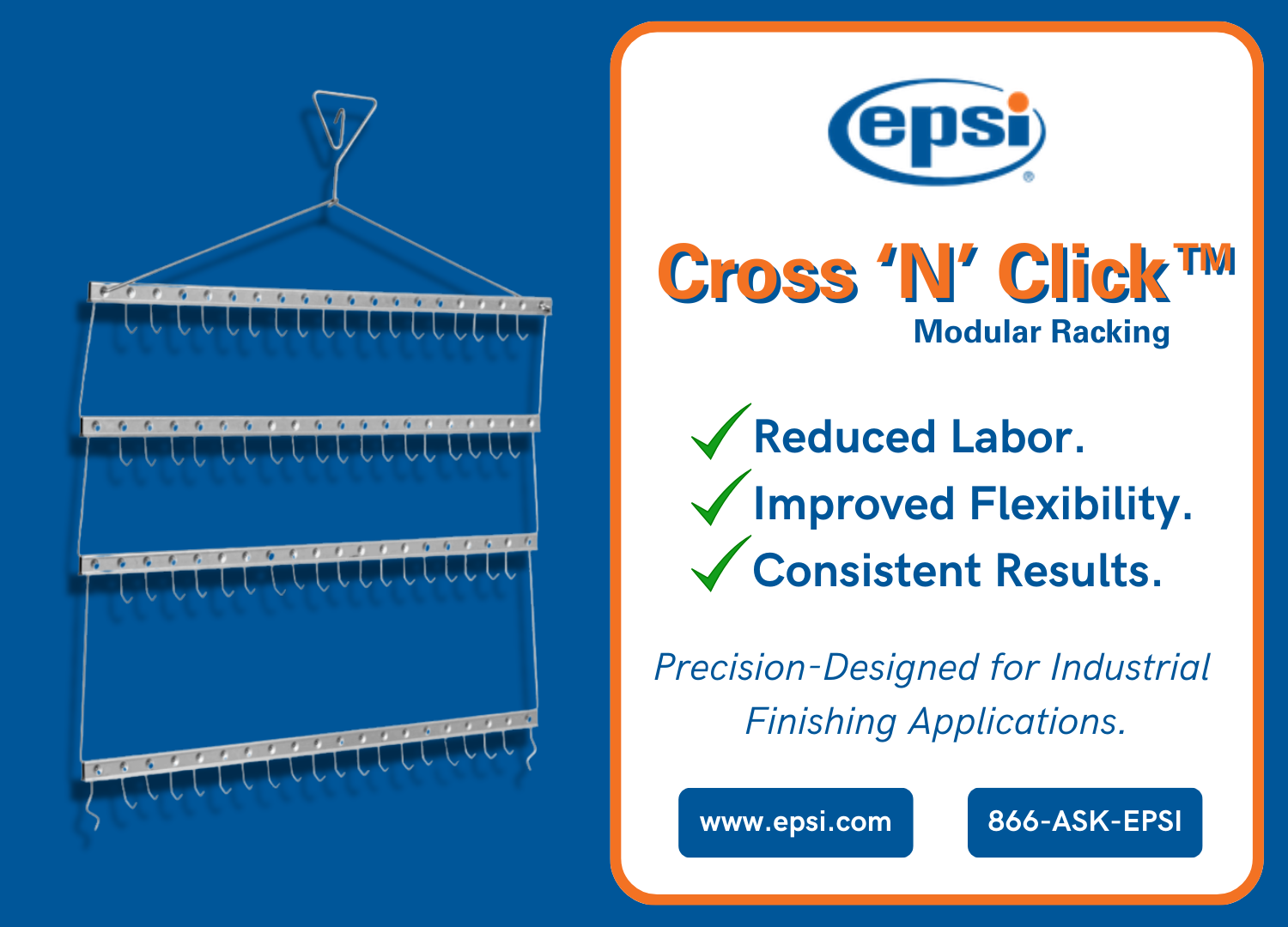
Modular systems, like EPSI’s Cross N Click Modular Racking System, offer a different approach. These systems are designed to adapt quickly to varying part sizes and production requirements without the need for completely new racks.
Modular racking is especially valuable for:
- Shops with frequent product changeovers
- Operations handling multiple part geometries
- Facilities looking to reduce downtime between runs
Instead of committing to a single configuration, modular systems allow you to adjust layouts, spacing, and density as needed. This flexibility can significantly improve throughput while reducing the need for additional capital investment in new racks.
3. Online vs. Offline Racking
Another key consideration is whether your racking process should occur online or offline. This decision impacts not only efficiency but also labor requirements and overall workflow.
Online racking integrates directly into the conveyor system, which can streamline production but requires precise timing and coordination. Offline racking, on the other hand, allows parts to be loaded onto racks before entering the line, providing more flexibility but potentially increasing handling time.
When deciding between the two, consider:
- Line speed and takt time
- Product mix and variability
- Available part window for loading
- Size and weight of racks
- Number of available personnel
- Plant space constraints
- Safety requirements
For high-speed lines with consistent parts, online racking may be the best option. For more complex operations with varied parts, offline racking can provide the control needed to maintain quality without slowing down production.
4. Optimizing Conveyor Space
Maximizing conveyor space is one of the most effective ways to increase efficiency without adding new equipment. Many operations focus only on the rack itself, but optimizing the area above the hanger can unlock additional capacity.
By modifying the “above the hanger” design, you can increase part density and improve how parts are distributed across the rack. This approach helps ensure that every available inch of conveyor space is being used effectively.
The benefits of optimizing conveyor space include:
- Increased throughput without increasing line speed
- Better balance of weight distribution
- Improved consistency across parts
Even small adjustments in rack configuration can lead to significant gains in productivity over time.
5. Part Presentation
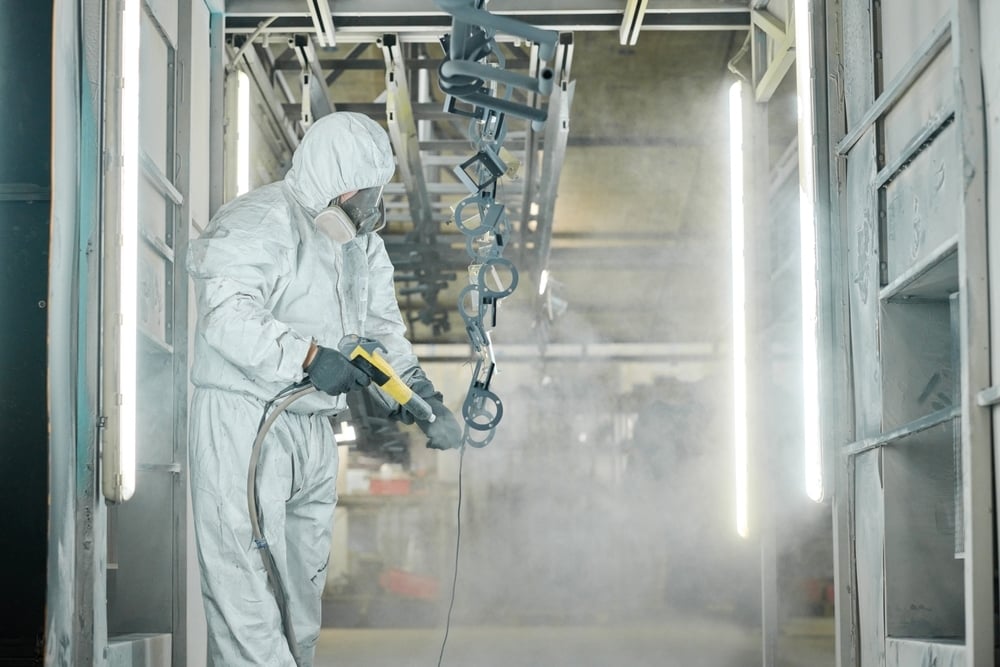
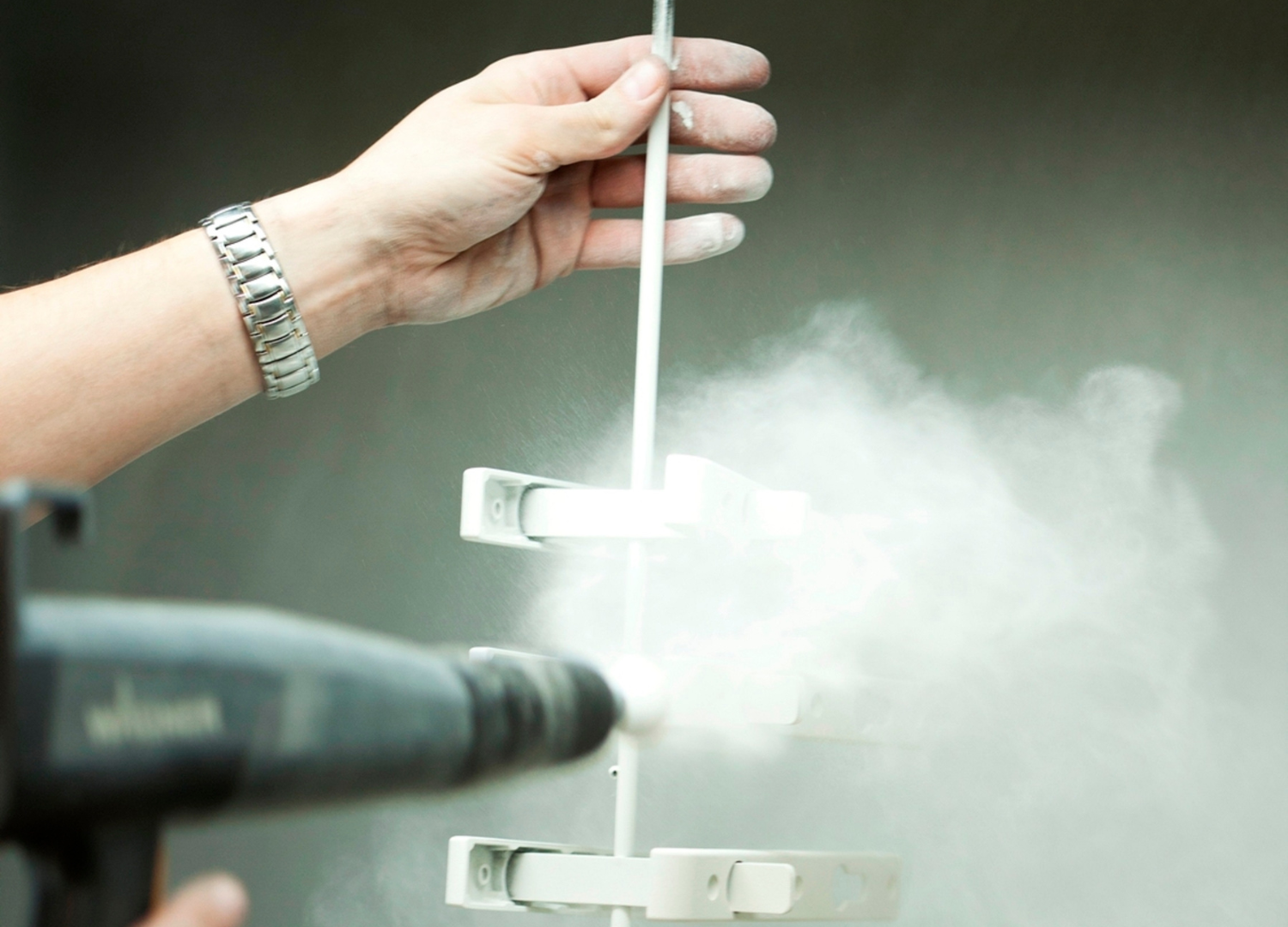
Consistent part presentation is essential for achieving high-quality coating results. If parts are positioned inconsistently on the rack, it can lead to uneven coverage, missed areas, and defects that require rework.
Proper presentation ensures that each part moves through cleaning, coating, and curing processes in a predictable and repeatable way. This consistency reduces variability and helps maintain a high standard of finish quality.
Key considerations for part presentation include orientation, spacing, and accessibility for spray coverage. When parts are positioned correctly, you reduce the likelihood of poorly coated products and minimize the need for recoating, saving both time and material.
Benefits of Custom Racking for Powder Coating
While standard racks can work in many situations, custom racking solutions offer a higher level of performance for operations looking to optimize efficiency and quality. They can be tailored to specific production needs, helping you overcome unique challenges. Here’s how.
Optimal Product Density
Custom racks are designed to maximize the number of parts per load without compromising coating quality. This allows you to increase throughput while maintaining proper spacing and airflow.
Quality and Efficiency
By tailoring the rack design to your exact parts, you can achieve more consistent coating results and reduce defects. This leads to smoother operations and fewer interruptions caused by rework.
Cost Savings
Custom racking can reduce labor costs, material waste, and energy usage. Over time, these savings add up, making it a smart investment for operations focused on long-term efficiency.
Flexibility and Adaptability
Even custom solutions can be designed with flexibility in mind. EPSI works with customers to create racking systems that accommodate future changes in production needs.
Customization
Every coating operation is different, and custom racking allows you to address specific challenges such as part geometry, weight distribution, and coating requirements. This level of customization ensures that your racking works for you, not against you.
Improve Your Powder Coating Rack Design With EPSI
Improving your powder coating rack design isn’t just about equipment. It’s about creating a more efficient, reliable, and scalable operation. From modular solutions like Cross N Click to fully custom racking systems, EPSI helps manufacturers solve real production challenges with practical, engineered solutions.
If you’re looking to reduce touch-ups, increase throughput, or improve consistency, the right racking strategy can make all the difference. Contact us today to learn how EPSI can help optimize your coating process.
Frequently Asked Questions
Powder Coating Rack Design
How often should powder coating racks be maintained or refurbished?
Regular maintenance schedules depend on usage and coating type, but most operations benefit from routine inspections every few weeks. Over time, coating buildup can affect grounding and performance, so periodic stripping or cleaning is essential. High-volume facilities may require more frequent attention, especially if racks are exposed to heavy coating layers. Establishing a preventive maintenance schedule helps avoid unexpected downtime and ensures consistent coating results.
What materials are best for powder coating racks?
Steel is the most commonly used material due to its strength, durability, and conductivity. However, the specific alloy and coating resistance can vary depending on your application. Some environments may require specialized materials that can withstand high temperatures or harsh chemicals. Selecting the right material helps extend the life of your racks and ensures reliable grounding, which is critical for achieving proper powder adhesion.
How does grounding impact powder coating performance?
Proper grounding is essential for effective powder transfer and adhesion. When racks lose conductivity due to coating buildup or poor design, it can lead to uneven coverage and wasted material. Ensuring strong and consistent grounding across all contact points helps maintain coating efficiency and reduces defects. Regular cleaning and thoughtful rack design play a major role in maintaining optimal grounding conditions.
Can automation be integrated into racking systems?
Yes, many modern coating operations are incorporating automation into their racking processes. Automated loading and unloading systems can improve consistency, reduce labor costs, and increase throughput. However, successful integration requires careful planning to ensure compatibility with existing equipment and workflows. Custom racking solutions are often designed with automation in mind to support long-term scalability.
What are common signs that a rack design needs improvement?
Frequent touch-ups, inconsistent coating coverage, and underutilized conveyor space are all indicators that your rack design may not be optimized. Other signs include excessive maintenance requirements, difficulty adapting to new parts, and inefficient loading processes. Identifying these issues early can help you make targeted improvements that enhance both productivity and quality.
How do environmental factors affect rack performance?
Temperature, humidity, and exposure to chemicals can all impact the performance and lifespan of powder coating racks. High heat can weaken materials over time, while corrosive environments may lead to premature wear. Choosing materials and designs that are suited to your specific environment helps ensure long-term reliability. Proper storage and maintenance practices also play a role in protecting your investment.
.png?width=1036&height=511&name=EPSI%20LOGO%20COLOR%20(1).png)
