.png?width=1036&height=511&name=EPSI%20LOGO%20COLOR%20(1).png "EPSI Engineered Services and Products Inc")
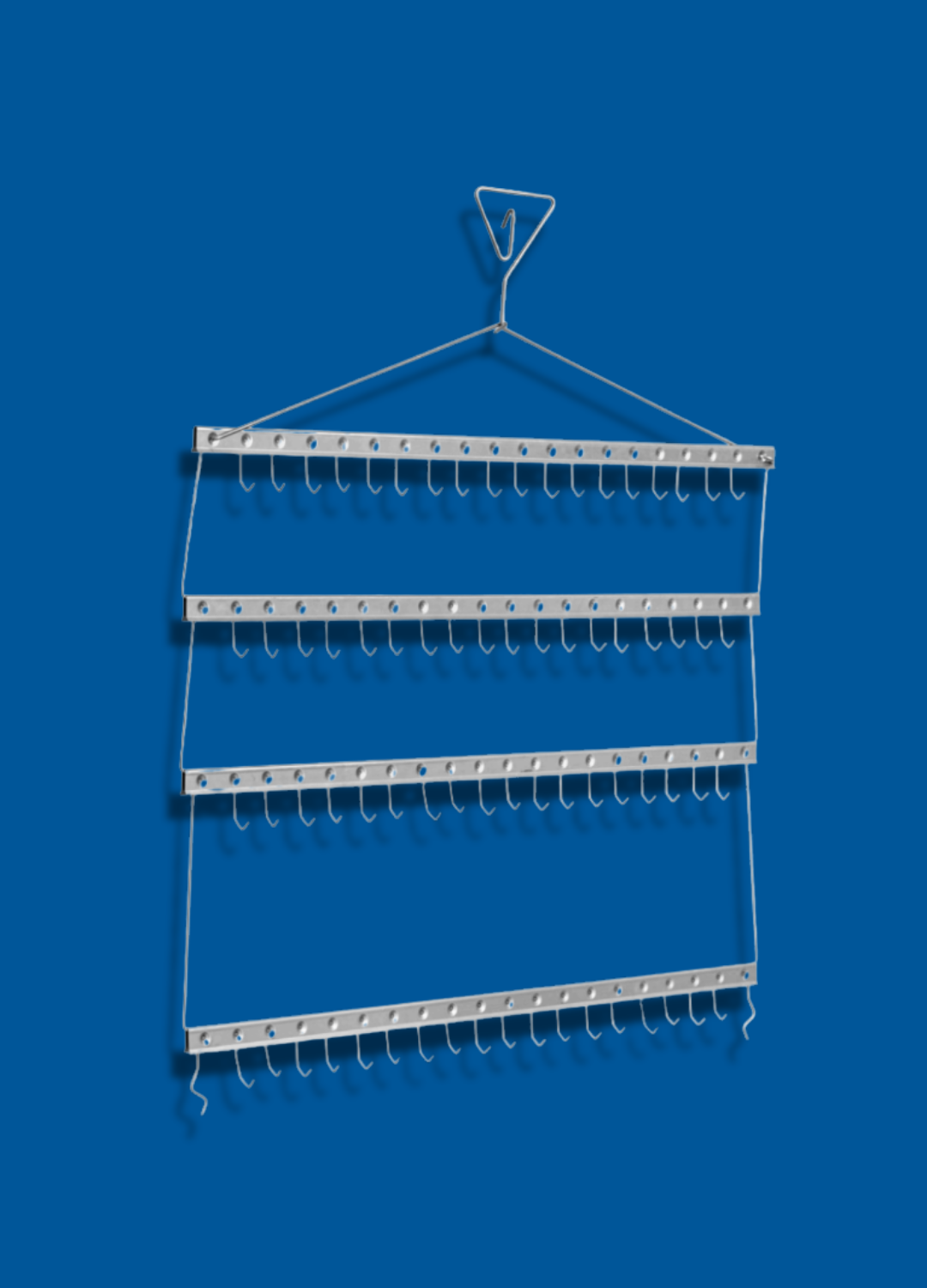
Cross 'N' Click™ Modular Racking
Improve Powder Coating Efficiency: Reduce labor time, improve flexibility, and support consistent coating results.
MEET
Cross 'N' Click™
A lightweight, configurable solution designed to bring greater flexibility and efficiency to powder coating and finishing operations.
Built for durability and ease of use, Cross N Click allows you to quickly adapt to changing part sizes and production demands without slowing down your workflow.
Its modular design supports consistent part positioning, streamlined setup, and reliable performance across a range of industries.
Aerospace
Automotive
Electronics
Manufacturing
Benefits of Cross 'N' Click™ Modular Racking System
Flexibility & Customization
Adjustable to adapt to your part shape and size.
Durability
Withstands repeated high-heat coating cycles and supports up to 100 lbs (45 kg).
Efficiency
Fast assembly, less downtime, more throughput
Compatibility
Integrates seamlessly with your ovens and booths.
Lower-Cost Shipping
Ships as parts for lower cost than welded racks.
How We Compare
-1.png "Cross N Click Comparison Guide (1)-1")
Quick Assembly. Less Downtime. More Throughput.
Learn More About Racking & Powder Coating
Powder Coating Small Parts: Why Racking Matters More Than You Think
On the surface, powder coating small parts seems like it should be easier than coating large components. Smaller parts, lighter weight, more pieces per run. Simple, right? In reality, small parts often create some of the biggest headaches on a powder coating line. Slower loading times, inconsistent coverage, rework, and unpredictable results can all stem from one overlooked factor: how those parts are racked. At Engineered Products & Services, Inc. (EPSI), we know that, while the coating chemistry and equipment may be dialed in, if your racking process isn’t optimized, you’ll feel it everywhere else. Let’s break down the most common pain points and where the right solutions can make a measurable difference. Why Powder Coating Small Parts is a Different Challenge With small parts, the actual powder coating process does not change. Parts still move through cleaning, coating, and curing just like larger components. What changes is everything surrounding that process. With small parts, the scale shifts dramatically. Instead of handling a few large items, operators are managing dozens or even hundreds of components at once. That increase in volume introduces more contact points, tighter spacing, and significantly more handling. What might be a simple step for large parts becomes much more complex when multiplied across an entire rack. This is why small inefficiencies show up faster and hit harder in small part applications. Even minor delays or inconsistencies can compound quickly over the course of a shift. The Real Bottleneck: Racking and Loading If your line ever feels slower than it should be, racking is usually where the issue starts. When powder coating small parts, loading often takes longer than the actual coating cycle. Operators may spend time figuring out placement, adjusting hooks, or working around a setup that isn’t designed for the parts they are running. Over time, this creates a bottleneck that limits how much product can move through the line. You might notice: Longer-than-expected loading and unloading times Frequent adjustments to racks during setup Inconsistent part placement from one rack to the next These issues may seem small in isolation, but across a full shift, they add up to lost productivity and higher labor costs. Grounding Problems You Can’t Ignore Proper grounding is essential for consistent powder adhesion, and this becomes more difficult with smaller parts. Because there is less surface area and more connection points, maintaining reliable electrical contact isn’t always straightforward. When grounding is inconsistent, the results tend to show up immediately on the finished product. You may see uneven coverage, thin spots, or areas where the powder did not fully adhere. What makes this especially frustrating is how inconsistent it can feel. One batch looks perfect, while the next requires rework. In many cases, the difference comes down to how well parts were racked and how consistently they made contact. When More Parts Per Rack Backfires It is natural to try to increase efficiency by fitting more parts onto each rack. In theory, higher density should lead to higher throughput. In practice, that approach can create new challenges if it’s not carefully managed. When parts are packed too tightly together, they can block each other during the spray process. This leads to uneven coating and inconsistent film build across the rack. In some cases, parts may even come into contact during curing, which can damage the finish and require rework. The goal isn’t just to fit more parts on a rack, but to do so in a way that maintains proper spacing and airflow. Without a structured approach, increasing density can actually reduce overall efficiency. Inconsistency Across Operators and Shifts If different operators are loading parts in different ways, you’re likely seeing inconsistent results. This is a common issue in finishing operations. Without a standardized approach to racking, each operator develops their own method. While some may be more efficient than others, the lack of consistency makes it difficult to maintain predictable output. Over time, this can lead to: Variability in coating quality Longer training times for new employees Challenges when trying to scale production Standardization is one of the most effective ways to improve both efficiency and quality, but it requires systems that support repeatable setups. RELATED POST: Standardized Masking for Powder Coating Process Improvement Why Racking Matters More Than You Think When you look at the entire process, it becomes clear that many of the biggest challenges in powder coating small parts happen before the powder is ever applied. Racking influences how quickly parts move through the line, how consistently they are coated, and how often rework is required. It’s not just a setup step. It’s a key driver of performance across the entire operation. Improving racking is often one of the fastest ways to see meaningful improvements in throughput and product quality. A Smarter Approach with Cross N Click™ This is where modular racking systems can make a real difference. EPSI’s Cross N Click™ Modular Racking System is designed to bring structure and repeatability to the way small parts are handled. Instead of relying on fixed racks or improvised setups, operators can create configurations that match the parts they are running. In practice, this means less guesswork and more consistency. Operators can load parts in a predictable way, which reduces setup time and improves overall efficiency. Because configurations can be repeated, you’re not starting from scratch with every new run. Some of the key benefits include: Faster loading with less adjustment between runs More consistent spacing, leading to improved coating results Better use of available rack space without overcrowding Easier training and more consistent performance across shifts Cross N Click™ does not change your coating process. It strengthens the part of the process that has the biggest impact on how well everything else performs. Powder Coating Small Parts: Improve Efficiency Where It Matters Most At the end of the day, powder coating small parts isn’t just about applying powder. It’s about how efficiently and consistently you can move parts through the entire process. When racking is inconsistent or inefficient, everything else suffers. When it’s optimized, you unlock better throughput, improved quality, and fewer production issues. If you’re looking for ways to improve your small part coating operation, EPSI can help you identify opportunities and implement solutions that fit your process. From modular racking systems like Cross N Click™ to high-performance masking products, we are here to support your success. Contact us today to learn more about how we can help improve your powder coating operation. Frequently Asked Questions Powder Coating Small Parts How do I know if my racking process is limiting production? If your operators are spending a significant amount of time loading and adjusting parts, racking may be slowing down your process. You might also notice inconsistent throughput or variations in how parts are positioned from one rack to another. Tracking loading time compared to total cycle time can provide insight into whether racking is becoming a bottleneck in your operation. What’s the best way to test improvements in my process? The most effective approach is to run controlled trials with a small group of parts. Compare your current setup to a new configuration and measure key factors such as loading time, coating consistency, and overall throughput. Testing across multiple runs helps account for variability and gives you a clearer picture of whether the changes are delivering meaningful improvements. How often should racks and hooks be cleaned or replaced? Racks and hooks should be inspected regularly to ensure they are free from excessive buildup and damage. Over time, coating buildup can interfere with grounding and reduce performance. Many operations establish routine cleaning or stripping schedules to maintain consistency. Replacing worn components when needed helps prevent defects and keeps your process running smoothly. Can one racking setup work for multiple part types? While it may be possible to use a single setup for similar parts, it isn’t always the most efficient approach. Differences in size, shape, and coating requirements can impact how parts should be positioned. Modular systems offer more flexibility, allowing you to adapt configurations as needed while still maintaining consistency and efficiency. How does part orientation affect coating results? Part orientation plays a significant role in how powder is applied and cured. Poor positioning can lead to uneven coverage, trapped powder, or inconsistent film thickness. Ensuring that parts are oriented to allow proper spray access and airflow helps achieve more uniform results across the entire rack. What’s the long-term benefit of improving small part processes? Improving your approach to small part coating can lead to better efficiency, lower labor costs, and reduced rework over time. By creating a more consistent and repeatable process, you can increase throughput without sacrificing quality. These improvements often have a lasting impact, helping your operation scale more effectively as production demands grow.
Mar 30, 2026
Powder Coating Rack Design: Key Factors to Consider
If your coating line is running but still struggling with inefficiencies, your racking may be the hidden bottleneck. Powder coating rack design plays a critical role in throughput, quality, and overall operational cost, yet it’s often overlooked until problems arise. At Engineered Products & Services (EPSI), we work closely with coaters to solve these challenges through smarter racking and masking solutions that improve performance without disrupting production. Whether you’re dealing with inconsistent coverage, excessive touch-ups, or underutilized conveyor space, the right rack design can transform your process. Let’s break down the most important factors to consider when evaluating or improving your racking strategy. 1. Rack Suitability Not all racks are created equal, and choosing the right one for your application is essential. A rack that works well for one type of part may create inefficiencies for another. When evaluating powder coating rack design, it’s important to consider the specific characteristics of your production environment. For example, applications involving powder coating small parts often require high-density racking solutions that maximize part count while maintaining proper spacing. On the other hand, larger or heavier components may demand more robust rack structures that prioritize durability and stability. You should also think about your production patterns. Long production runs benefit from racks that are optimized for repeatability and durability, while operations handling families of parts or kit-based production need flexibility without sacrificing efficiency. A well-designed rack should support: Minimal touch-up requirements by reducing contact points Consistent grounding for effective coating transfer Cost-effective rack stripping and maintenance If your current setup leads to frequent rework or difficult cleaning cycles, it may be time to reevaluate whether your racking is truly suited to your application. 2. Dedicated vs. Modular Racking One of the most important decisions in powder coating rack design is whether to use dedicated or modular racking systems. Each approach has its place depending on your operation. Dedicated racks are built for specific parts and can deliver excellent consistency and efficiency for high-volume, repeatable jobs. However, they lack flexibility and can become a limitation when product mix changes. Modular systems, like EPSI’s Cross N Click Modular Racking System, offer a different approach. These systems are designed to adapt quickly to varying part sizes and production requirements without the need for completely new racks. Modular racking is especially valuable for: Shops with frequent product changeovers Operations handling multiple part geometries Facilities looking to reduce downtime between runs Instead of committing to a single configuration, modular systems allow you to adjust layouts, spacing, and density as needed. This flexibility can significantly improve throughput while reducing the need for additional capital investment in new racks. 3. Online vs. Offline Racking Another key consideration is whether your racking process should occur online or offline. This decision impacts not only efficiency but also labor requirements and overall workflow. Online racking integrates directly into the conveyor system, which can streamline production but requires precise timing and coordination. Offline racking, on the other hand, allows parts to be loaded onto racks before entering the line, providing more flexibility but potentially increasing handling time. When deciding between the two, consider: Line speed and takt time Product mix and variability Available part window for loading Size and weight of racks Number of available personnel Plant space constraints Safety requirements For high-speed lines with consistent parts, online racking may be the best option. For more complex operations with varied parts, offline racking can provide the control needed to maintain quality without slowing down production. 4. Optimizing Conveyor Space Maximizing conveyor space is one of the most effective ways to increase efficiency without adding new equipment. Many operations focus only on the rack itself, but optimizing the area above the hanger can unlock additional capacity. By modifying the “above the hanger” design, you can increase part density and improve how parts are distributed across the rack. This approach helps ensure that every available inch of conveyor space is being used effectively. The benefits of optimizing conveyor space include: Increased throughput without increasing line speed Better balance of weight distribution Improved consistency across parts Even small adjustments in rack configuration can lead to significant gains in productivity over time. 5. Part Presentation Consistent part presentation is essential for achieving high-quality coating results. If parts are positioned inconsistently on the rack, it can lead to uneven coverage, missed areas, and defects that require rework. Proper presentation ensures that each part moves through cleaning, coating, and curing processes in a predictable and repeatable way. This consistency reduces variability and helps maintain a high standard of finish quality. Key considerations for part presentation include orientation, spacing, and accessibility for spray coverage. When parts are positioned correctly, you reduce the likelihood of poorly coated products and minimize the need for recoating, saving both time and material. Benefits of Custom Racking for Powder Coating While standard racks can work in many situations, custom racking solutions offer a higher level of performance for operations looking to optimize efficiency and quality. They can be tailored to specific production needs, helping you overcome unique challenges. Here’s how. Optimal Product Density Custom racks are designed to maximize the number of parts per load without compromising coating quality. This allows you to increase throughput while maintaining proper spacing and airflow. Quality and Efficiency By tailoring the rack design to your exact parts, you can achieve more consistent coating results and reduce defects. This leads to smoother operations and fewer interruptions caused by rework. Cost Savings Custom racking can reduce labor costs, material waste, and energy usage. Over time, these savings add up, making it a smart investment for operations focused on long-term efficiency. Flexibility and Adaptability Even custom solutions can be designed with flexibility in mind. EPSI works with customers to create racking systems that accommodate future changes in production needs. Customization Every coating operation is different, and custom racking allows you to address specific challenges such as part geometry, weight distribution, and coating requirements. This level of customization ensures that your racking works for you, not against you. Improve Your Powder Coating Rack Design With EPSI Improving your powder coating rack design isn’t just about equipment. It’s about creating a more efficient, reliable, and scalable operation. From modular solutions like Cross N Click to fully custom racking systems, EPSI helps manufacturers solve real production challenges with practical, engineered solutions. If you’re looking to reduce touch-ups, increase throughput, or improve consistency, the right racking strategy can make all the difference. Contact us today to learn how EPSI can help optimize your coating process. Frequently Asked Questions Powder Coating Rack Design How often should powder coating racks be maintained or refurbished? Regular maintenance schedules depend on usage and coating type, but most operations benefit from routine inspections every few weeks. Over time, coating buildup can affect grounding and performance, so periodic stripping or cleaning is essential. High-volume facilities may require more frequent attention, especially if racks are exposed to heavy coating layers. Establishing a preventive maintenance schedule helps avoid unexpected downtime and ensures consistent coating results. What materials are best for powder coating racks? Steel is the most commonly used material due to its strength, durability, and conductivity. However, the specific alloy and coating resistance can vary depending on your application. Some environments may require specialized materials that can withstand high temperatures or harsh chemicals. Selecting the right material helps extend the life of your racks and ensures reliable grounding, which is critical for achieving proper powder adhesion. How does grounding impact powder coating performance? Proper grounding is essential for effective powder transfer and adhesion. When racks lose conductivity due to coating buildup or poor design, it can lead to uneven coverage and wasted material. Ensuring strong and consistent grounding across all contact points helps maintain coating efficiency and reduces defects. Regular cleaning and thoughtful rack design play a major role in maintaining optimal grounding conditions. Can automation be integrated into racking systems? Yes, many modern coating operations are incorporating automation into their racking processes. Automated loading and unloading systems can improve consistency, reduce labor costs, and increase throughput. However, successful integration requires careful planning to ensure compatibility with existing equipment and workflows. Custom racking solutions are often designed with automation in mind to support long-term scalability. What are common signs that a rack design needs improvement? Frequent touch-ups, inconsistent coating coverage, and underutilized conveyor space are all indicators that your rack design may not be optimized. Other signs include excessive maintenance requirements, difficulty adapting to new parts, and inefficient loading processes. Identifying these issues early can help you make targeted improvements that enhance both productivity and quality. How do environmental factors affect rack performance? Temperature, humidity, and exposure to chemicals can all impact the performance and lifespan of powder coating racks. High heat can weaken materials over time, while corrosive environments may lead to premature wear. Choosing materials and designs that are suited to your specific environment helps ensure long-term reliability. Proper storage and maintenance practices also play a role in protecting your investment.
Mar 30, 2026
10 Ways to Improve Powder Coating Throughput
When production targets keep climbing but quality standards won’t budge, you need smarter systems, not just faster conveyors. If you’re looking to improve powder coating throughput without sacrificing finish consistency, the solution lies in optimizing the entire process, not just one station. High-volume powder coating lines operate in demanding environments where heat, chemistry, geometry, and scheduling all intersect. Whether you serve automotive, aerospace, medical, or industrial manufacturing, sustainable gains come from engineering improvements that reduce variability, increase density, and eliminate waste across the line. 1. Identify and Eliminate the True Bottleneck It’s easy to assume the spray booth is slowing you down. In reality, bottlenecks often appear upstream or downstream. Common culprits include inconsistent pretreatment dwell times, dry-off ovens that can’t keep pace with line speed, cure ovens with uneven heat zones, inefficient hanging methods, and manual inspection steps that interrupt flow. A thorough process mapping audit reveals where work-in-progress accumulates. Once you identify the actual constraint, you can address it directly instead of increasing line speed and amplifying existing problems. 2. Optimize Racking Density and Part Orientation Racking is one of the most overlooked contributors to throughput. Better orientation leads to faster, more uniform coverage. Higher density means more parts per cycle. Cleaner attachment points reduce contamination risk. Modern modular systems like EPSI’s Cross N Click™ Modular Racking System are designed specifically for flexibility and efficiency. Because components click into place without tools, changeovers are faster and configurations can be adjusted to maximize part density for different SKUs. Increased density alone can significantly improve daily output without altering conveyor speed. Proper hook placement, balanced loading, and engineered rack design also ensure consistent grounding, which directly impacts transfer efficiency and coating uniformity. 3. Increase Transfer Efficiency with Proper Gun Calibration Transfer efficiency determines how much powder adheres to the part versus ending up in reclaim. When TE is low, operators compensate with extra passes, which slows production. To improve TE: Calibrate guns regularly Adjust kV and microamps for specific geometries Ensure consistent grounding Use programmable recipes for repeatable settings Higher transfer efficiency means fewer passes, shorter cycle times, and reduced material waste, all of which support higher throughput without compromising finish quality. 4. Stabilize Pretreatment to Reduce Rework Throughput isn’t just about speed. It’s about usable output. Adhesion failures and surface defects caused by inconsistent pretreatment lead to costly rework that erases production gains. Stable pretreatment requires tight control over chemical concentrations, bath temperatures, pH, and dwell times. Automated dosing and sensor monitoring can eliminate operator variability. When pretreatment is consistent, downstream defects drop, allowing you to maintain steady line velocity with confidence. 5. Improve Cure Oven Consistency If your cure oven has cold spots or fluctuating profiles, you’re forced to slow the line to ensure proper curing. That safety margin reduces overall capacity. Thermal profiling, airflow balancing, and improved recirculation help maintain uniform temperatures across the load. Sealing air leaks and validating ramp and soak curves ensures thin and thick components cure properly at optimal speeds. When cure profiles are predictable, you can safely run at higher conveyor speeds without risking under-cured finishes. 6. Standardize Masking for Faster Loading and Cleaner Results Masking plays a critical role in both quality and efficiency. Improvised or inconsistent masking increases setup time and leads to rework. Engineered masking solutions such as high-temperature caps, plugs, tapes, and custom silicone components simplify loading and protect critical surfaces in harsh chemical and thermal environments. Using purpose-built masking products reduces operator guesswork and speeds up part preparation. Because EPSI manufactures custom molded rubber, plastic, and metal masking products, facilities can standardize on reliable components that withstand repeated cycles. That consistency improves both throughput and finish quality. 7. Schedule by Part Family to Minimize Changeovers Mixed runs with constant parameter adjustments slow everything down. Instead of processing jobs in arrival order, group them by substrate type, coating thickness, geometry, cure requirements, or color. A part-family scheduling strategy reduces gun adjustments, minimizes oven changes, and decreases downtime between batches. Fewer transitions mean smoother flow and more consistent output. 8. Implement In-Line Quality Monitoring Stopping production to investigate defects disrupts throughput more than catching issues early. In-line film thickness gauges, infrared cure verification tools, conveyor speed monitoring, and automated visual inspection systems allow you to detect deviations in real time. Instead of discovering problems at final inspection, you address them immediately. Quality checks should support flow, not interrupt it. Smart monitoring protects production speed while maintaining standards. 9. Improve Line Layout and Material Flow Throughput losses sometimes have nothing to do with coating equipment. Poor workstation layout can slow operators significantly. Evaluate rack staging areas, forklift paths, loading station ergonomics, and WIP storage zones. Even small adjustments that reduce walking distance or reposition frequently used racks can improve line velocity. Lean layout principles eliminate wasted motion and create smoother transitions between stages. 10. Invest in Continuous Operator Training Operators influence throughput more than any machine. Proper grounding techniques, consistent hanging practices, correct spray patterns, and understanding cure profiles all affect speed and quality. Ongoing training programs build consistency across shifts. When operators understand how each variable impacts downstream results, they make better real-time decisions that support throughput goals. Facilities that prioritize education typically see both higher productivity and lower reject rates. Frequently Asked Questions Improving Powder Coating Throughput How do I improve powder coating throughput without increasing conveyor speed? Focus on eliminating variability first. Improve racking density, stabilize pretreatment, optimize transfer efficiency, and standardize masking. These changes increase usable output without forcing the line to run faster than its supporting systems can handle. Does better racking really impact throughput that much? Yes. Increasing part density per rack and improving orientation can significantly boost daily production. Modular systems like Cross N Click™ allow quick reconfiguration and efficient loading, which directly supports higher throughput. What role does grounding play in production speed? Proper grounding improves transfer efficiency. When powder adheres more effectively, operators need fewer passes. Fewer passes shorten coating time per part, which increases overall line capacity. Can masking products affect throughput? Absolutely. High-quality caps, plugs, and tapes reduce setup time and prevent defects that lead to rework. Standardized masking simplifies preparation and protects surfaces consistently in high-temperature environments. How do I know if my oven is limiting throughput? Conduct thermal profiling to check temperature uniformity. If you’re slowing the line to compensate for cold spots or inconsistent cure, oven performance may be restricting capacity. Is automation necessary to improve throughput? Automation isn’t mandatory, but it reduces variability in repetitive tasks like gun triggering and spray pattern control. In high-volume environments, automation often supports consistent, higher-speed production.
Feb 23, 2026