.png?width=1036&height=511&name=EPSI%20LOGO%20COLOR%20(1).png "EPSI Engineered Services and Products Inc")
In powder coating, the smallest details often make the biggest difference. Choosing the right masking products for powder coating can mean the difference between a flawless finish and costly rework. At Engineered Products & Services (EPSI), we’ve seen firsthand how the right masking approach can improve efficiency, reduce waste, and elevate final results.
Masking isn’t just about covering areas you don’t want coated. It’s about selecting materials that can withstand your process, align with your workflow, and deliver consistent outcomes. Whether you’re coating high volumes or handling specialized parts, understanding how to choose the right masking products will help you protect critical surfaces while optimizing your operation.
Determine Temperature Resistance Needs
One of the first factors to consider when selecting masking materials is temperature resistance. Powder coating typically involves curing temperatures that can exceed 350°F, and in some cases go even higher depending on the application. If your masking materials can’t handle the heat, they’ll degrade, melt, or fail during the curing process.
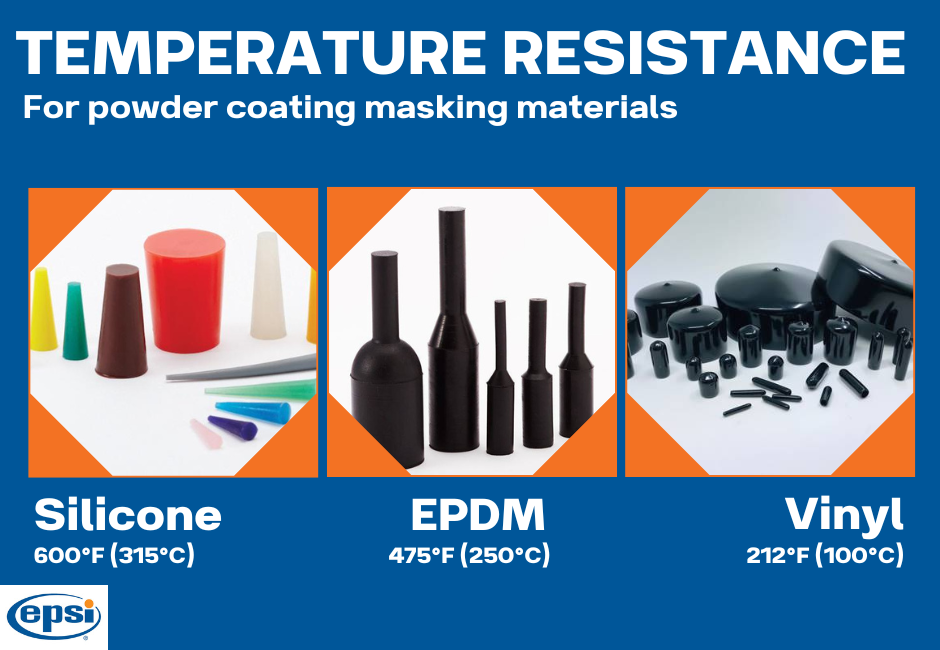
EPSI offers a range of materials designed to meet different temperature requirements. Silicone caps and plugs are a top choice for high-heat environments, withstanding temperatures up to 600°F (315°C). EPDM caps are another reliable option, capable of handling temperatures up to 475°F (250°C), making them suitable for many standard powder coating processes.
Vinyl caps, on the other hand, are limited to around 212°F (100°C). They are best suited for room temperature applications such as painting or light-duty masking but are not recommended for powder coating ovens. Choosing the right material based on temperature ensures your masking performs as expected and protects your parts throughout the entire process.
Consider Chemical Resistance
Temperature is only part of the equation. You also need to think about how your masking materials will react to the chemicals used in your process. Pre-treatment stages often involve cleaners, degreasers, or phosphates that can break down certain materials if they are not compatible.
Silicone is highly resistant to most chemicals, making it a versatile choice across a wide range of applications. It maintains its integrity even when exposed to aggressive substances, which is why it is commonly used in demanding environments.
EPDM offers good resistance to many chemicals but has limitations when it comes to petroleum-based products. If your process involves oils or solvents derived from petroleum, EPDM may not be the best option. Vinyl provides only limited chemical resistance and may degrade quickly when exposed to strong solvents or harsh cleaning agents.
Matching your masking material to your chemical environment helps prevent premature failure and ensures consistent protection throughout your coating line.
Evaluate Cost
Cost is always a factor when selecting masking products, but it’s important to look beyond the initial price tag. Silicone and EPDM materials typically come at a higher upfront cost, but they are often preferred in applications involving high heat or aggressive chemicals because of their durability and performance.
Vinyl is a lower-cost option, which can be appealing for operations looking to reduce expenses. However, its limited resistance to heat and chemicals means it may not hold up in more demanding environments. This can lead to more frequent replacements, increased downtime, and potential quality issues.
When evaluating cost, consider not just the purchase price, but also how the material performs in your specific application. The right choice will support your process without introducing hidden costs.
Balance Cost with Reusability
Reusability plays a major role in determining the true cost-effectiveness of your masking materials. Silicone and EPDM products are designed to be reused multiple times, making them a strong investment for operations running consistent, high-volume jobs.
In high-heat or chemically intensive environments, reusable materials can significantly reduce the need for constant replacement. Over time, this leads to lower overall costs and a more stable process.
Vinyl, while less expensive upfront, is typically not suited for repeated use in demanding applications. It may lose its shape or integrity after limited exposure, making it more appropriate for short-term or low-temperature tasks.
Balancing upfront cost with long-term usability allows you to make smarter purchasing decisions that support both your budget and your production goals.
Factor in Labor Requirements
Masking is not just about materials. It also has a direct impact on labor. The time and effort required to install and remove masking products can affect your throughput and overall efficiency.
Some applications may benefit from simple, easy-to-apply solutions like caps and plugs that can be installed quickly with minimal training. Others may require more precise masking methods that take additional time but deliver higher accuracy.
If your operation includes automated processes, you’ll need to ensure your masking products are compatible with your equipment. Consistency in application and removal becomes even more critical in these environments.
By evaluating labor requirements alongside material performance, you can select masking solutions that streamline your workflow and reduce bottlenecks.
Choose Smarter Masking Products for Powder Coating With EPSI
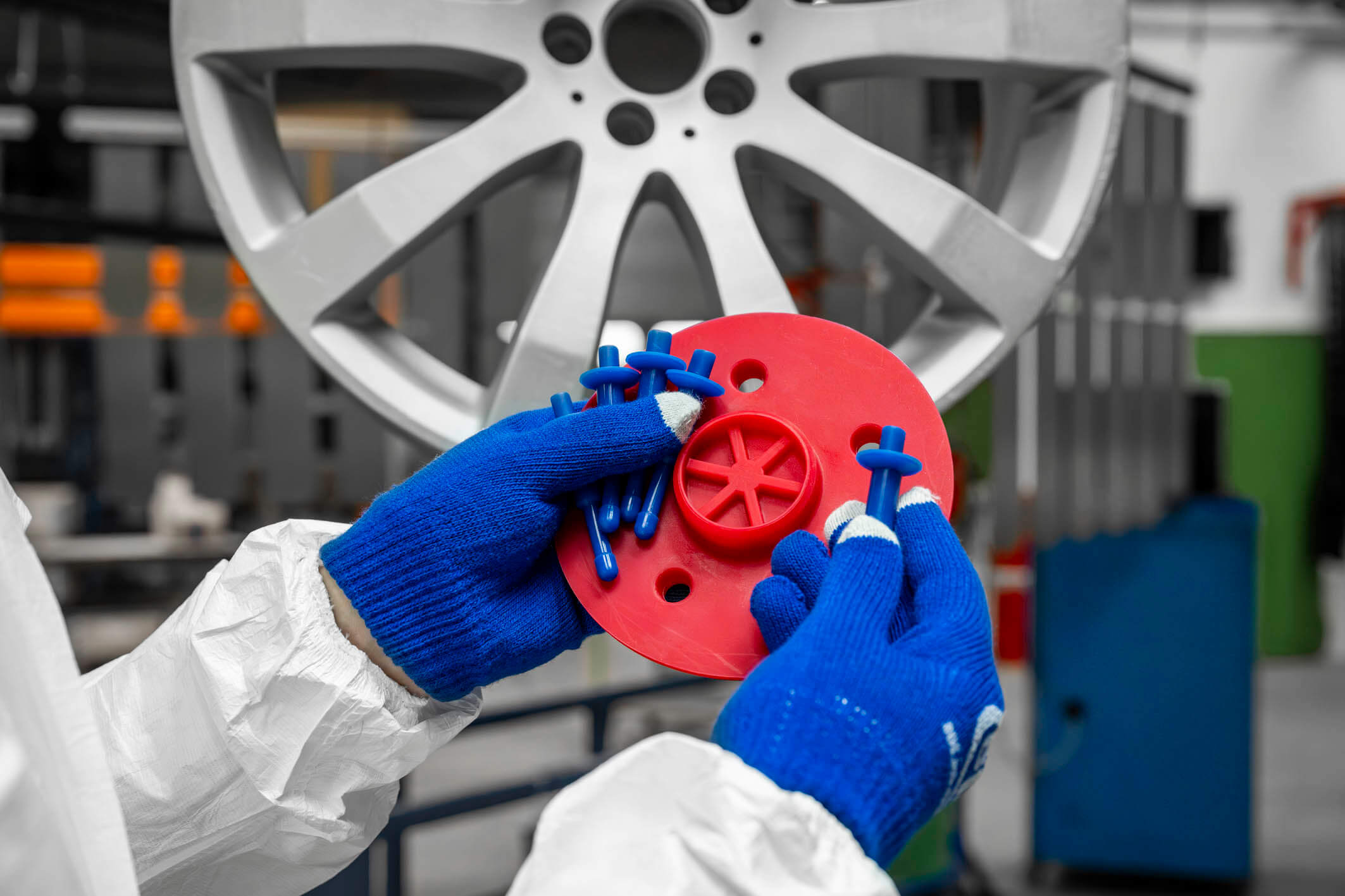
Selecting the right masking products for powder coating is about more than checking boxes. It’s about understanding your process, identifying your challenges, and choosing solutions that support your goals. From high-temperature silicone caps to versatile EPDM options and specialized masking solutions like EPSI’s Wheel Masking Kit, the right products can transform your operation.
If you’re looking to improve efficiency, reduce waste, and achieve more consistent results, it may be time to reevaluate your masking strategy. Contact us today to learn how EPSI can help you find the right solution for your application.